Introduction
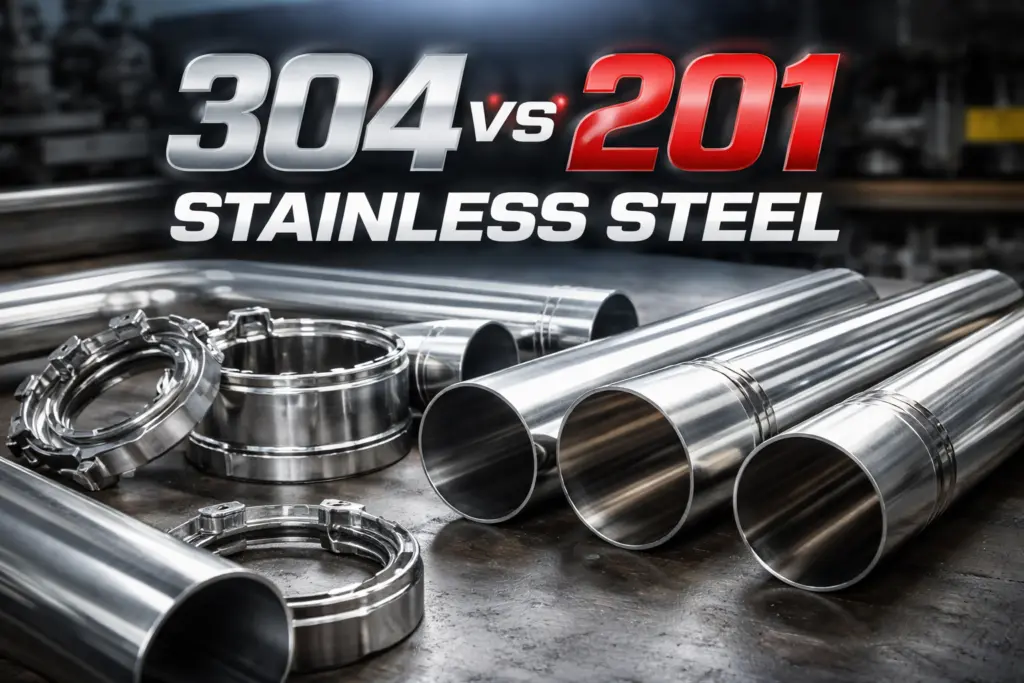
When it comes to stainless steel in the automotive industry, one of the most common questions is whether to use 304 or 201 stainless steel.
While they may look similar at first glance, the differences between these two materials have a direct impact on performance, durability, and long-term cost. Choosing the right one can make a significant difference in how your project performs over time.
This guide breaks down the key differences to help you make the right decision.
What is 304 Stainless Steel?
304 stainless steel is widely regarded as the industry standard for high-quality automotive applications.
It contains higher levels of chromium and nickel, which give it excellent resistance to corrosion and the ability to withstand high temperatures without degrading.
Key Benefits:
- Excellent corrosion resistance
- Strong and durable under heat
- Long lifespan
- Maintains appearance over time
Ideal Applications:
- Performance exhaust systems
- Turbocharged setups
- Vehicles exposed to moisture or coastal conditions
- Long-term builds where reliability matters
What is 201 Stainless Steel?
201 stainless steel is a more cost-effective alternative to 304. It achieves a lower price point by reducing nickel content and replacing it with manganese.
While it still offers some corrosion resistance, it is not as durable as 304 and is more likely to show signs of wear over time.
Key Benefits:
- More affordable
- Suitable for basic applications
- Readily available
Ideal Applications:
- Budget builds
- Non-critical components
- Short-term projects
- Dry environments
304 vs 201 Stainless Steel Comparison
| Feature | 304 Stainless Steel | 201 Stainless Steel |
|---|---|---|
| Corrosion Resistance | Excellent | Moderate to Low |
| Lifespan | Long-term | Shorter lifespan |
| Heat Resistance | High | Moderate |
| Cost | Higher upfront | More affordable |
| Appearance Over Time | Maintains finish | May dull or |
Real-World Automotive Use
In practical automotive applications, the differences between 304 and 201 become very clear.
For exhaust systems, 304 stainless steel is the preferred choice due to its ability to handle heat cycles and resist corrosion. 201 can be used for more budget-focused builds, but it may not last as long under the same conditions.
For turbocharged vehicles, 304 is strongly recommended. The higher temperatures involved require a material that can handle repeated heat stress without weakening.
In coastal areas or environments with high moisture, 304 performs significantly better due to its superior resistance to rust and corrosion.
Which One Should You Choose?
The right choice depends on your priorities.
If your focus is on long-term durability, performance, and reliability, 304 stainless steel is the better option. It offers greater resistance to heat and corrosion, making it ideal for demanding automotive applications.
If budget is the main concern, 201 stainless steel can be a practical alternative. However, it is important to understand that it may require replacement sooner, especially in harsher conditions.
Final Thoughts
Both 304 and 201 stainless steel have their place in the automotive industry, but they serve different purposes.
304 stainless steel is designed for performance and longevity, making it the preferred choice for most serious builds.
201 stainless steel offers a more affordable entry point, suitable for less demanding applications.
Choosing the right material from the start will help ensure better results, fewer issues, and greater long-term value.